
Client
Behavox is an AI-driven platform for regulatory compliance that uncovers financial regulatory misconduct and identifies compliance risks by analyzing corporate data.
Challenge
Define a long-term experience vision for the platform that empowers users to find actionable insights using internal communications. Focus on improving the configuration user flow which helps users aggregate, analyze, and act to prevent regulatory breaches.
My Contributions
UX/UI Design
Journey Map
UX Research
Context
A compliance officer’s job is to ensure the firm is in compliance with regulatory and legal requirements as well as internal policies and bylaws. Part of this role includes conducting internal audits and reviewing business operations and communications, like emails.
The platform’s testing tool enables users to analyze internal communications, but requires considerable configuration to adjust the tool to the user’s particular organizational needs. Regular touchpoints with subject matter experts informed my process and helped to ensure that my designs covered a wide range of edge cases.
Establish a baseline
This project began with a round of usability testing to identify the pain points users were facing in the platform. They were tasked with testing and analyzing configurations in the platform.
Our two major findings were as follows;
- Users really struggled with understanding the technical aspect of the configurations
- They were unsure how to compare the results of one test against another
Define User Personas
Following our usability testing and many discussions with subject matter experts, the UX team created a series of user personas to use as we continued to iterate on the product design. For the comparison tool, we focused on the primary client persona that would use the tool regularly, in addition to the sales representative persona who needed to be able to demo the tool effectively to prospective clients.

Continuous Iteration
As we developed solutions to the pain points identified, we validated each design iteration with subject matter experts and end users. This allowed us to continuously improve interactions based on user feedback while preventing engineers from developing new features before they were ready to launch.
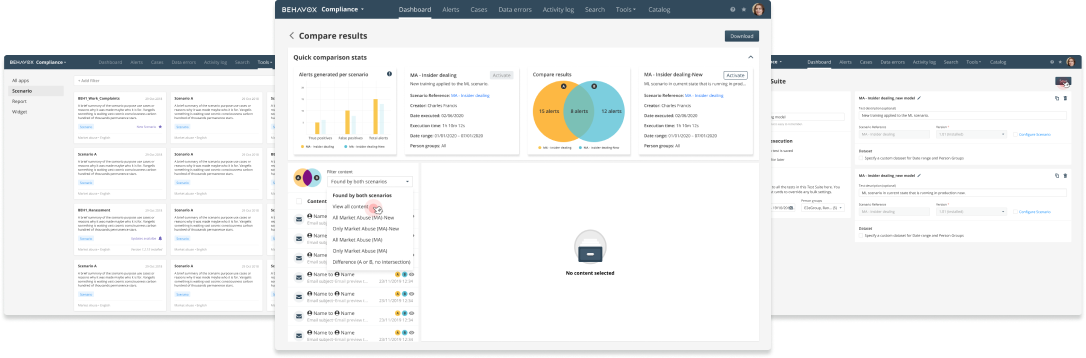
Product Strategy
We had a small team that was assigned to several products which limited our development capacity. I worked closely with a Product Manager and tech lead to define short and long-term milestones for the product.
Instead of an overnight overhaul, we opted for a staggered feature release schedule. Our long-term plan was to employ gradual iteration to improve each step of the user’s journey from setup to activation.
Small Changes, Big Impact
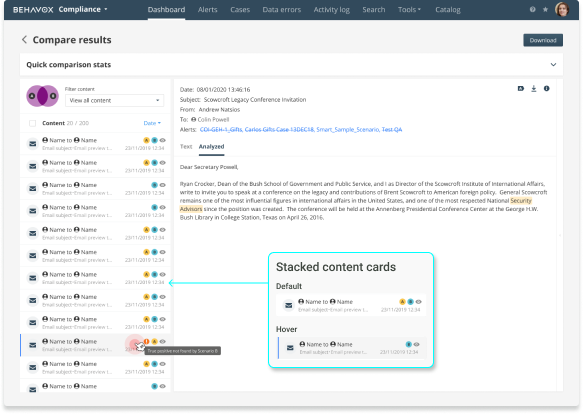
New features designed using as many existing components as possible. Following existing design patterns allowed developers to quickly implement new features without disruption to the workflows that our users were already accustomed to.
Keeping Up with Changes
As company priorities evolved, a budget reallocation reduced emphasis on the initiatives I was leading and my role no longer aligned with the direction of the organization which led to a mutual decision to part ways.
 Tamika Dorrington Portfolio